
Buying pickleball gear can feel simple until you are standing in a store or browsing online with five different questions in your head. Do you need a power paddle or a quicker one? Are your balls made for the court you use? Will your grip stay secure when your hands get sweaty? Can you practice at home without turning every rally into a noise complaint?
The right answer is not one universal “best” product. It is a setup that fits your surface, playing style, hand comfort, and available space. This CORE pickleball gear guide walks through the five products supplied for this article and explains where each one fits, using specifications and descriptions published by CORE Athletics.
Why pickleball gear choices matter in 2026
Pickleball is no longer a niche activity that only needs a borrowed paddle and a few balls. SFIA says 24.3 million Americans played in 2025, with participation rising sharply from 2020 and the sport ranking among the most played in the country. USA Pickleball’s 2025 growth report also recorded thousands of locations, tens of thousands of courts, and hundreds of equipment submissions, which means shoppers have more equipment decisions to make.
Those decisions are practical, not just technical. Reddit users ask whether they bought an indoor or outdoor ball, how to handle sweaty hands, and how to practice at home with less noise. A useful setup starts by answering four questions:
Where will you play: an outdoor hard court, an indoor venue, or a home space?
Do you prefer aggressive attacks, strategic placement, or beginner-friendly control?
Does your handle feel secure and comfortable during long sessions?
What equipment is included, and what still needs to be purchased?
Five CORE products at a glance
Product | Published details | Best fit in a setup |
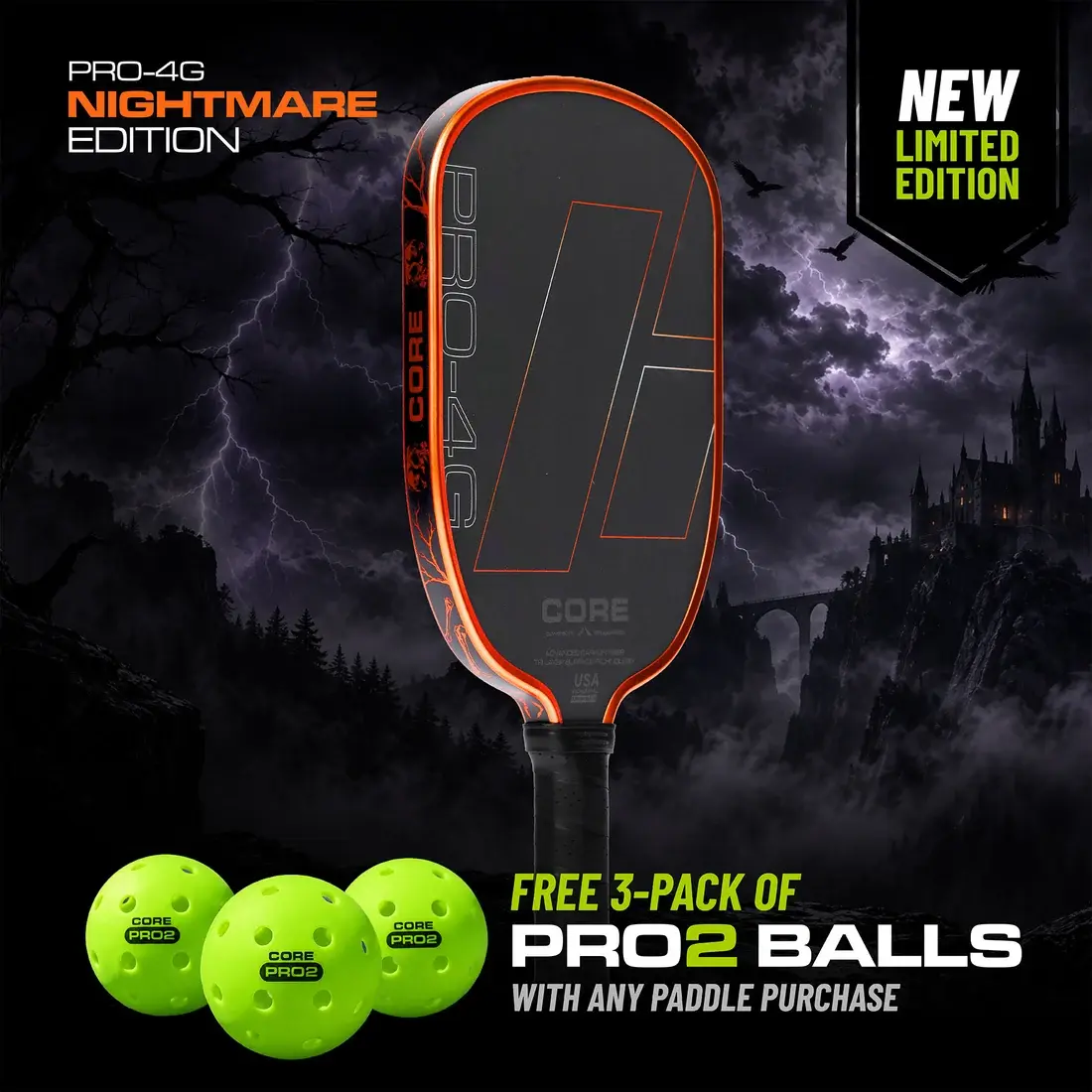
CORE PRO 4G Nightmare | T700 raw carbon surface, 16mm hybrid honeycomb and foam core, reverse-teardrop shape, 8.0 oz ±0.1, head-light, USAP and UPA-A approved | Aggressive intermediate to elite play |
CORE PRO 4G Raven | T700 raw carbon surface, 16mm hybrid honeycomb and foam core, reverse-teardrop shape, 8.0 oz ±0.1, head-light, USAP and UPA-A approved | Strategic intermediate to elite play |
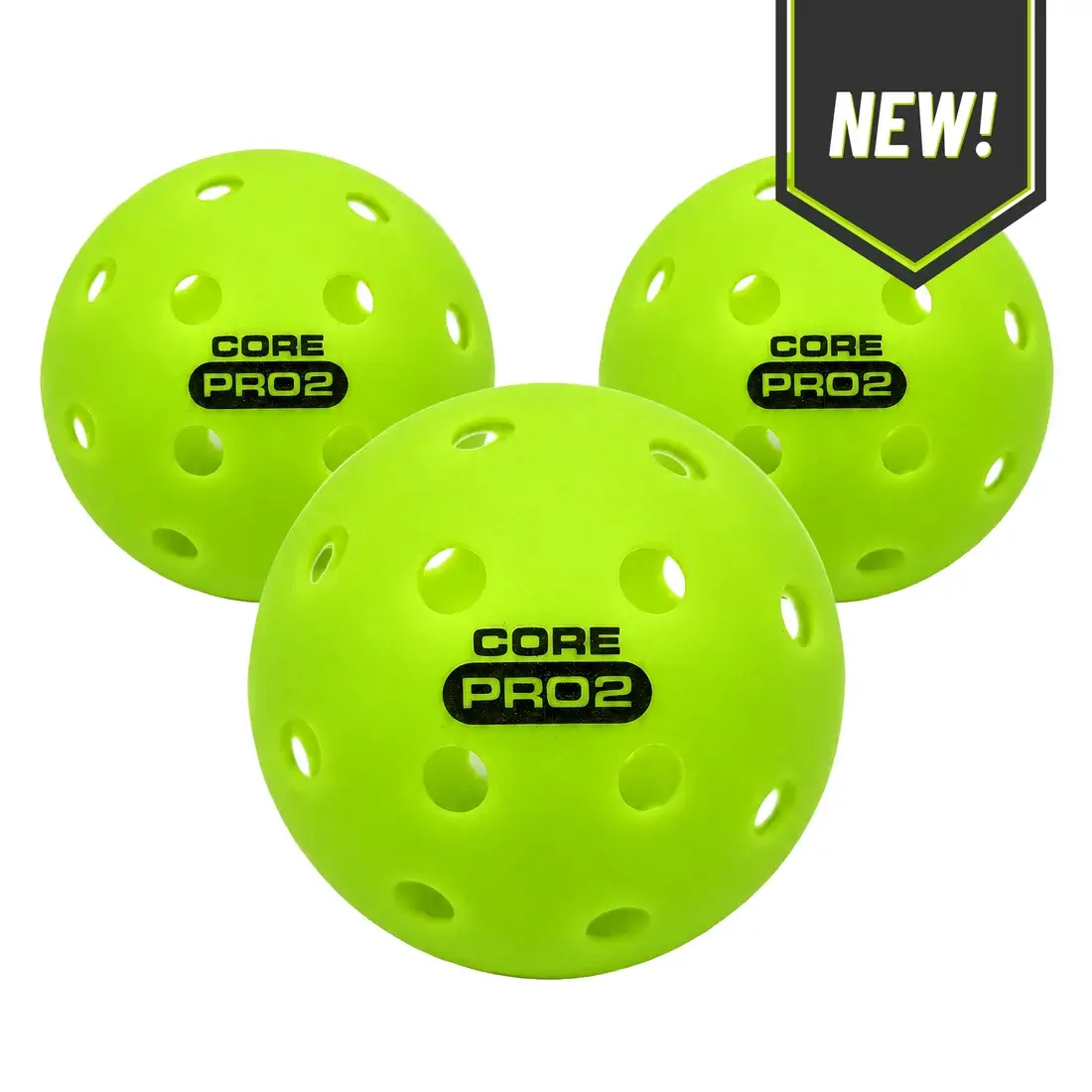
CORE PRO2 Pickleballs | 40-hole textured lime green outdoor ball with crack-resistant construction | Hard courts, including outdoor asphalt and tennis-style surfaces |
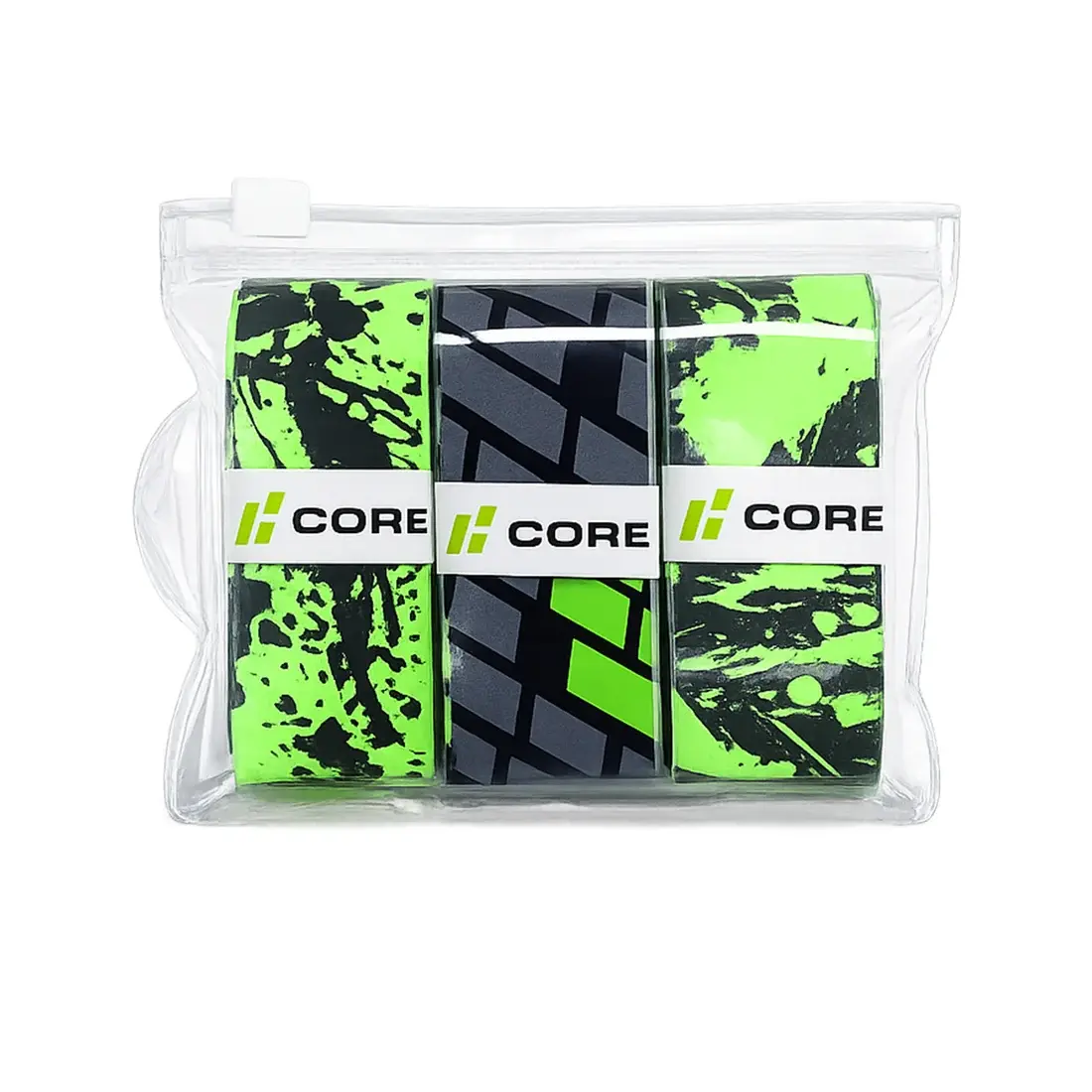
CORE Pickleball Overgrip 3 Pack | Three overgrips that add tackiness, moisture absorption, cushioning, and a small increase in grip size | Sweaty hands, worn grips, or a need for more handle traction |
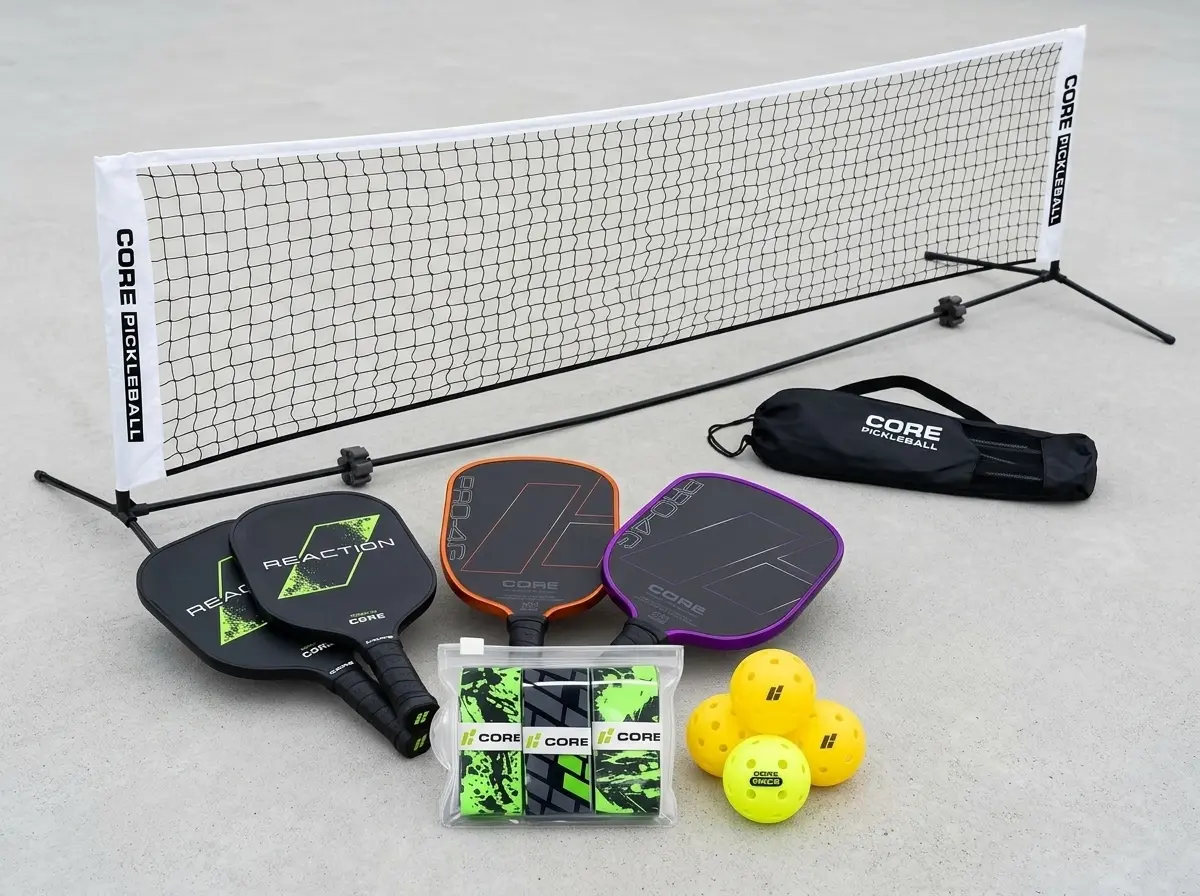
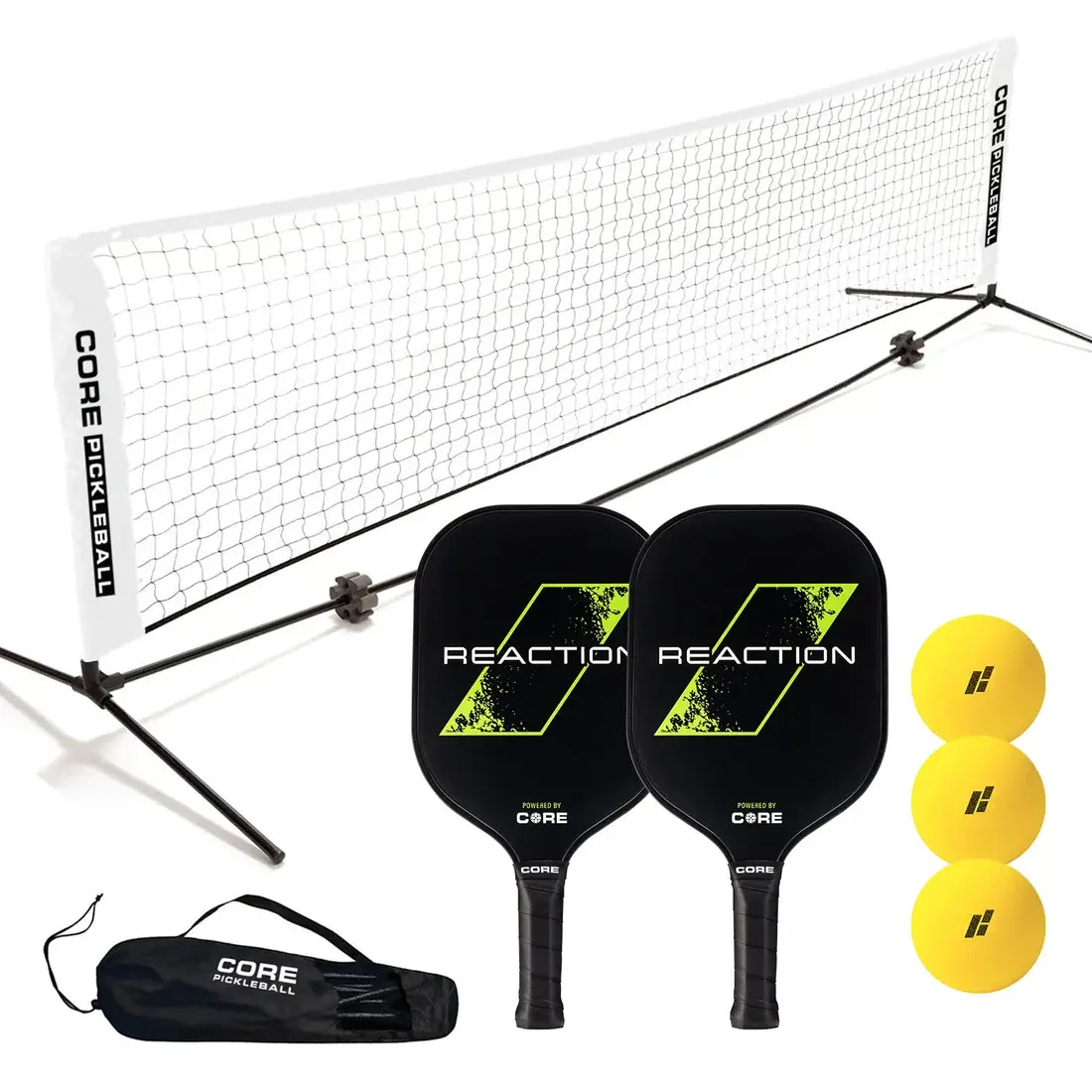
Play In The House Bundle | Three Stealth Quiet Foam Pickleballs, a 10-foot mini net with carry case, and two Reaction Energy Graphite paddles | Smaller indoor spaces, beginners, family play, and rainy-day practice |
The table is a planning tool, not a promise that one product will suit every player. Your preferred weight, grip feel, court, and local rules still matter.
CORE PRO 4G paddles: Nightmare vs Raven
The CORE PRO 4G Nightmare and Raven pages list the same core construction and dimensions: a T700 raw carbon surface, 16mm hybrid honeycomb and foam core, reverse-teardrop profile, 16.35-inch total length, 5.35-inch handle, 4.12-inch grip circumference, and 8.0 ounces plus or minus 0.1. Both are listed as head-light and approved by USAP and UPA-A.
That shared specification is important. The choice is not presented as a simple “more power versus less power” construction change on the supplied pages. CORE instead describes the paddles through different play-style language.
When the Nightmare positioning makes sense
CORE describes the Nightmare as a limited-edition paddle for aggressive intermediate to elite players. Its product description highlights aggressive spin, explosive attacks, quick hands, and a Foam Power Halo intended to extend the sweet spot.
If you naturally look for speedups, attacking drives, and fast exchanges, that positioning gives you a clear starting point. The head-light listing also aligns with a player who values a quick-feeling paddle in hand, although individual feel always depends on technique and preference.
When the Raven positioning makes sense
CORE positions the Raven for strategic intermediate to elite players who create opportunities with placement, spin, and fast counterattacks. The page calls out dipping drives, slices, roll volleys, a generous sweet spot, and quick kitchen play.
Choose the Raven if that description sounds closer to your game plan. This is a style-based recommendation drawn from CORE’s own product language, not a claim that the Raven has different listed materials or dimensions.
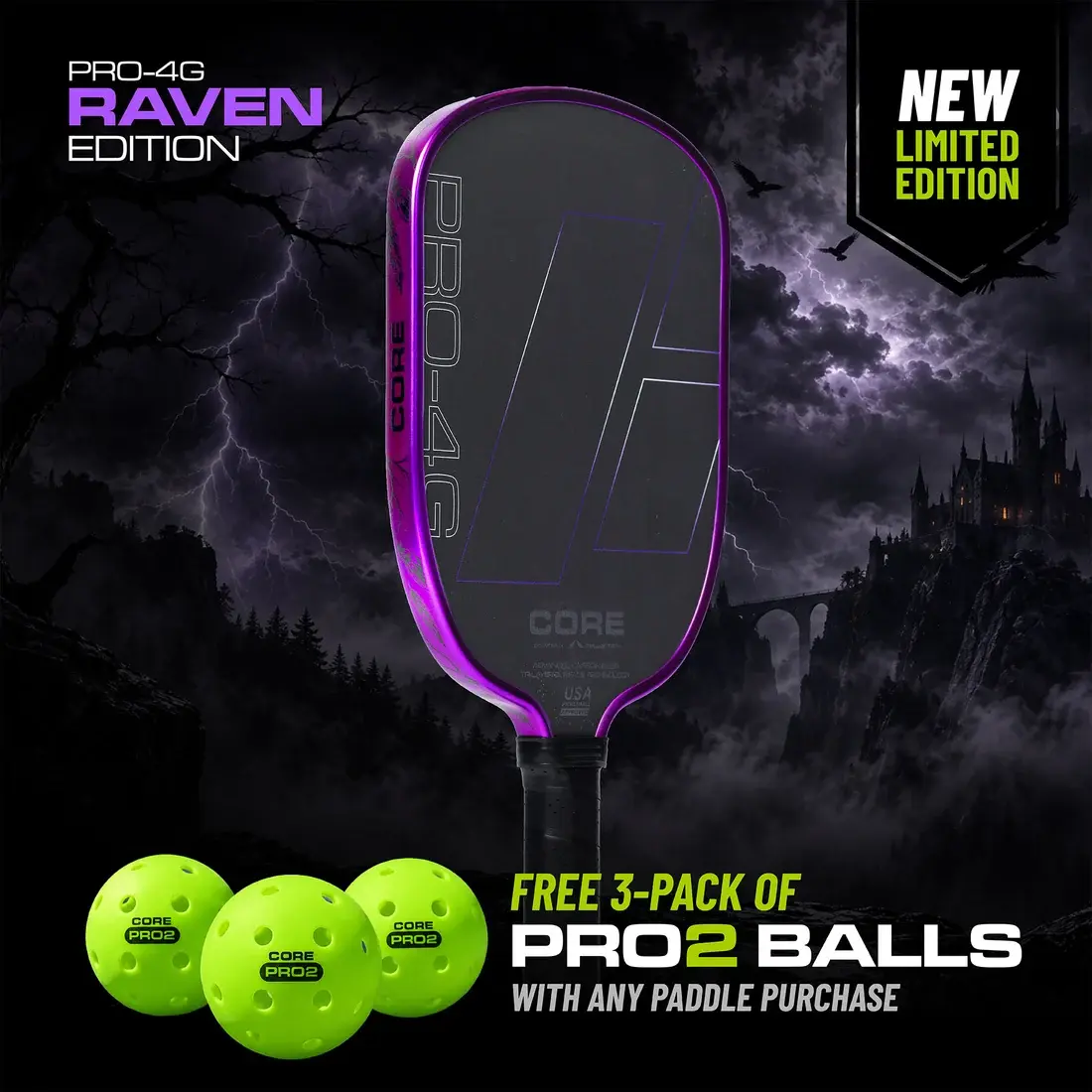
A simple paddle decision
Choose the Nightmare if CORE’s aggressive, explosive attack description matches how you want to play.
Choose the Raven if placement, spin variation, and fast counterattacks are more central to your strategy.
If you are still learning, test the handle and balance whenever a retailer’s return or demo policy allows it.
CORE PRO2 pickleballs: match the ball to the court
The CORE PRO2 is described as a 40-hole outdoor pickleball with a textured lime green surface and crack-resistant construction. CORE says its design is intended to maintain shape through demanding play and to work on traditional hard courts, including outdoor asphalt and tennis-style surfaces.
That makes the PRO2 a logical choice for an outdoor hard-court kit. It is also described for indoor or outdoor use on the product page, but the same page specifically emphasizes hard-court performance. Check the rules and ball requirements at your facility before a league or tournament session.
Do not confuse the PRO2 with the balls in the Play In The House Bundle. The bundle includes Stealth Quiet Foam Pickleballs for reduced-noise indoor play, while the PRO2 is the textured 40-hole ball described for hard surfaces. Those are different use cases.
The overgrip upgrade is small but practical
The CORE Pickleball Overgrip 3 Pack is designed to refresh a new paddle’s feel or extend the life of an existing grip. CORE says the overgrips improve tackiness, help reduce slipping, absorb moisture, add a small amount of cushioning, and typically increase grip size by about 1/16 inch or less. The package includes three overgrips.
This is especially relevant if your hands get sweaty. Recent Reddit questions show players actively looking for legal ways to keep a paddle from slipping during play. An overgrip will not change your swing mechanics, but a secure handle can make it easier to focus on contact and placement.
Before adding one, hold your paddle and note whether the current handle already feels too large or too small. Replace the overgrip when it becomes slick, worn, or no longer gives you the traction you expect. CORE does not publish a universal replacement schedule on the supplied page, so condition is a better guide than an invented number of sessions.
Build a quiet indoor practice setup
The Play In The House Bundle is the most direct option for a quiet pickleball indoor setup. CORE lists three Stealth Quiet Foam Pickleballs for reduced-noise play, a 10-foot mini pickleball net that sets up in minutes and includes a carry case, and two Reaction Energy Graphite Pickleball Paddles. CORE describes it for living rooms, basements, garages, and other small spaces, as well as beginners, families, and rainy-day games.
Use the word “reduced,” not “silent.” Foam balls can make indoor practice more practical, but they do not remove every sound or every safety concern. Clear furniture, protect fragile objects, respect household rules, and make sure the available room is suitable before you start.
Also note the paddle distinction: this bundle includes Reaction Energy Graphite paddles, not the CORE PRO 4G Nightmare or Raven. It is a ready-to-use indoor starter solution rather than a replacement for a tournament-oriented outdoor paddle setup.
Match your CORE gear to your use case
Competitive outdoor player
Start with either CORE PRO 4G paddle, add CORE PRO2 pickleballs for hard-court sessions, and use the overgrip if you need more traction or moisture management. Select Nightmare or Raven based on the play-style descriptions above.
Strategic intermediate player
The Raven’s published positioning emphasizes placement, spin, and fast counters. Pair it with the PRO2 for the appropriate hard-court sessions, then adjust handle feel with the overgrip if needed.
Beginner, family, or small-space household
The Play In The House Bundle supplies the basic indoor pieces in one package: quiet foam balls, a compact net, and two paddles. It can help you learn spacing and rally basics before investing in specialized outdoor equipment.
Player refreshing an existing setup
An overgrip can be the least expensive-feeling change because it affects the contact point you use on every shot. Inspect the current grip first, then add one layer and reassess the handle size.
CORE pickleball gear buying checklist
Before ordering, confirm:
Court surface: PRO2 is described for hard-court use, while the bundle’s foam balls are intended for reduced-noise indoor play.
Play style: Compare the Nightmare’s aggressive positioning with the Raven’s strategic positioning.
Paddle details: Review listed weight, length, handle length, grip circumference, balance, and approval information.
Handle comfort: Account for the small size increase an overgrip can add.
Space and noise: The indoor bundle reduces noise, but it is not a guarantee of silent play.
Included equipment: Confirm whether you are buying only a paddle, a ball pack, an overgrip pack, or the complete bundle.
Current policies: Check Core Athletics’ live product page for current stock, shipping, returns, and event-approval information before checkout.
Conclusion: build the setup that fits your court
Good CORE pickleball gear is not about collecting the most products. It is about matching each piece to the way you play: a 4G paddle for your preferred style, PRO2 balls for hard-court sessions, an overgrip for a more secure handle, or the Play In The House Bundle for reduced-noise indoor practice.
Review the live Core Athletics product pages, confirm current policies, and choose the setup that fits your court, space, and comfort needs. Start with one clear use case, then add equipment as your game develops.